The cyberpunk city was supposed to stay on the page.
Neon-slick high-rises owned by multinational companies, cops wearing corporate logos, citizens downgraded to users in a walled garden of glass and bandwidth — in the 80s, that was a safely fictional thought experiment about what happens when capital eats the state and spits out a skyline. Then a bunch of very rich people started pitching exactly that as the next stage of human progress.
In the last few years, something weird has been happening at the overlap of venture capital, urban planning, and ideology. Tech founders and financiers aren’t just funding apps and AI models; they’re trying to spin up whole cities and micro-nations from scratch:
- Praxis’ network-born “civilization project”
- Próspera’s corporate charter enclave on a Honduran island
- Telosa’s $400 billion desert utopia drawn by a starchitect and backed by a single billionaire
Each one promises liberation from “broken” legacy systems: faster governance, cleaner streets, greener energy, smarter everything. Each one also centralizes power, land, and data in structures that look a lot more like companies than countries.
This is where cyberpunk stops being a warning and starts to feel like an early-access build. These projects treat territory like a startup, governance like an API, and citizenship like a premium subscription. They rely on legal carve‑outs and curated populations to create spaces where the normal constraints of democracy are softened or suspended. In other words, they’re running live experiments on the core question that underpins a lot of science fiction: what happens when someone with enough money recodes the operating system of society?
What happens when someone with enough money recodes the operating system of society?
That’s exactly the question I asked in my own cyberpunk books. I didn’t know about these city-experiments at the time, but it turns out that I was fictionalizing something that’s actively happening in the world today.
The futurism of my cyberpunk novels is really going to hit hard when we discuss outcomes. In other words, what I’ve written about will happen. But how I’ve predicted it will turn out for all of us is still in the realm of “what if?”
In the sections that follow, we’ll dig into three of the most telling case studies. Praxis, the cloud-native “nation” trying to manifest itself as a physical city for techno‑optimists. Próspera, the corporate charter zone that turned a slice of Caribbean island into a parallel legal universe. And Telosa, the gleaming render of a city that wants to fix capitalism with a new land‑ownership ideology and architecture that looks pretty much identical to my proposed “dystopia in disguise” themes.
Taken together, they read like three different drafts of the same idea: build the future by privatizing where people live and work — and let computers run it all.
The Big Idea: Corporate Technocity as Genre Creep
“Corporate technocity” is the point where a city stops being primarily a public institution and starts acting like a product with a dev roadmap and a brand deck. Instead of voting your way into a future, you apply, subscribe, or invest into it. The core pattern is simple: take a chunk of land (or promise one), wrap it in custom rules, flood it with infrastructure and sensors, and then curate who gets to live there based on capital, skills, or ideology. The result is a new urban species: places that look like cities on the outside but behave internally like ambitious SaaS companies with streets.
This is where the genre line blurs. Classic cyberpunk imagines megacorps carving out enclaves where they can soft‑ban democracy, shortcut regulations, and make life run on proprietary systems. What Praxis, Próspera, and Telosa represent are early, messy drafts of that logic in the real world. Each claims to be fixing something “broken” in existing cities — bureaucracy, corruption, inequality, decaying infrastructure — but all three reach for similar tools: special legal status, private governance, and dense techno‑infrastructure that turns daily life into something that you can optimize.
You can map them on a spectrum. On one end, a project like Praxis starts as a highly online subculture trying to cohere into a city — more cloud nation than concrete, at least at first. In the middle, Próspera is a very literal corporate city-state: a carved‑out legal enclave with its own rules running parallel to a host country’s democracy. On the other end, Telosa is a billionaire’s urban sim pitched as a corrective to capitalism itself, complete with its own economic ideology. They differ in setting, tone, and level of polish, but the underlying thought is the same: A city is the hardware that a society runs on, and if you want a newer, better operating system, you need purpose-built hardware.
A city is the hardware that a society runs on, and if you want a newer, better operating system, you need purpose-built hardware.
Praxis: The City That Wants a Body
Praxis starts in the cloud — or more precisely, a Discord server. Before there’s a skyline, there’s a vibe: a self-selected swarm of techno‑optimists, accelerationists, and “builders” gathering on socials, in private chats, and at tightly curated events, all convinced they’re founding the next civilization rather than just the next startup. The sales pitch is simple and grandiose: existing cities are too slow, too regulated, too spiritually exhausted to handle AI, biotech, and whatever comes after; so if you want a world that reaches the stars, you don’t lobby the old system, you build a new city designed for that trajectory from day zero. (Again…hardware, society, etc.)
Right now, that “city” is mostly a network and a brand, orbiting the promise of future territory. The plan is to negotiate special “acceleration zones” with host governments — custom regulatory sandboxes where the community can cluster physically under friendlier rules and lighter friction. Membership is selective and ideological: you don’t just move to Praxis, you’re onboarded into it. That’s the tell. This isn’t a messy, pluralistic conurbation growing out of trade routes and accidents; it’s an intent‑stacked environment where culture, law, and infrastructure are all tuned to reinforce a narrow vision of progress. In cyberpunk terms, it’s a soft corporate arcology in pre‑alpha, booting up as a lifestyle movement long before the first security gate or glass tower goes up.
The concept of a “network nation” originates from crypto thinker Balaji Srinivasan, embodying people’s current imagination of a better society. According to Balaji’s description, a network nation is a digital nation that initially launches as an online community and then materializes on land when the time is right. — AIcoin.com
Próspera: The Corporate Charter City
If Praxis is a city trying to escape gravity in the cloud, Próspera is what happens when one actually makes landfall. Built on the Honduran island of Roatán, it isn’t just a real estate play; it sits inside a special legal wrapper that gives it broad autonomy over taxes, regulations, and dispute resolution. Instead of being just another beachfront development, it operates more like a corporate-run micro‑jurisdiction: companies can incorporate there, residents can sign up to its rules, and a bespoke legal and administrative system runs in parallel to the host country’s normal institutions.
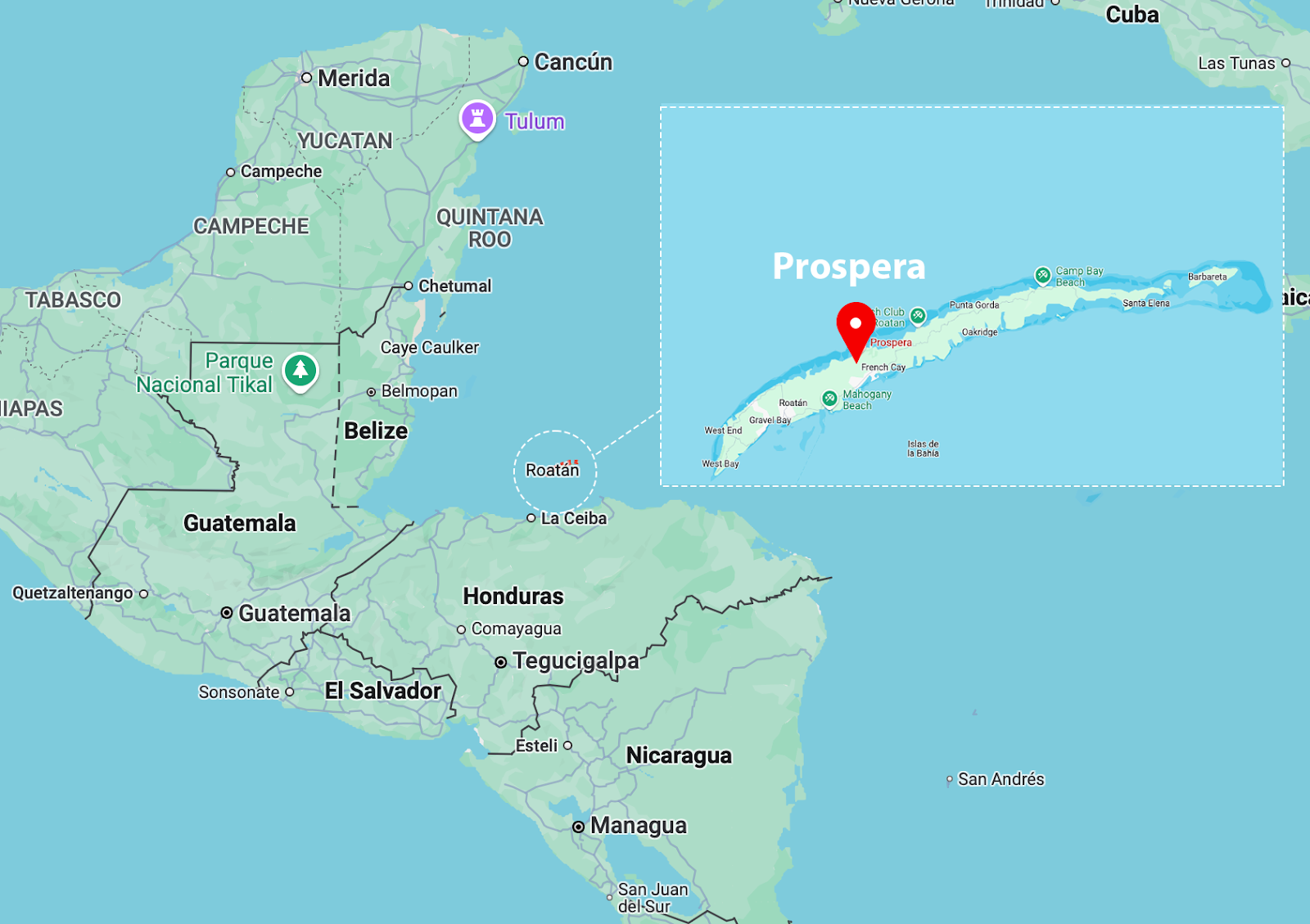
On paper, Próspera sells itself as a “startup city” that can do governance better — faster approvals, investor‑friendly rules, streamlined arbitration, glossy talk of opportunity and innovation. Under the hood, there’s a sharper edge: private ownership, corporate power, and voting booths replaced by boardrooms. (That’s why the term “corporate colonialism” is often tossed around.) From a cyberpunk angle, Próspera is the early‑access version of the extraterritorial enclave: a place where citizenship swaps your social contract for a terms‑of‑service.
Telosa: Billionaire Utopia as Urban Prototype
Telosa is what happens when a billionaire named Marc Lore decides SimCity isn’t interactive enough and commissions a real one. The pitch: a $400 billion “city of the future” for millions of people, dropped onto cheap land in the American desert, running on clean energy, autonomous vehicles, vertical farms, and an economic philosophy called “equitism.” The promise is that if you rewrite the land-ownership model and layer in enough smart infrastructure, you can patch capitalism and urban life in one go.

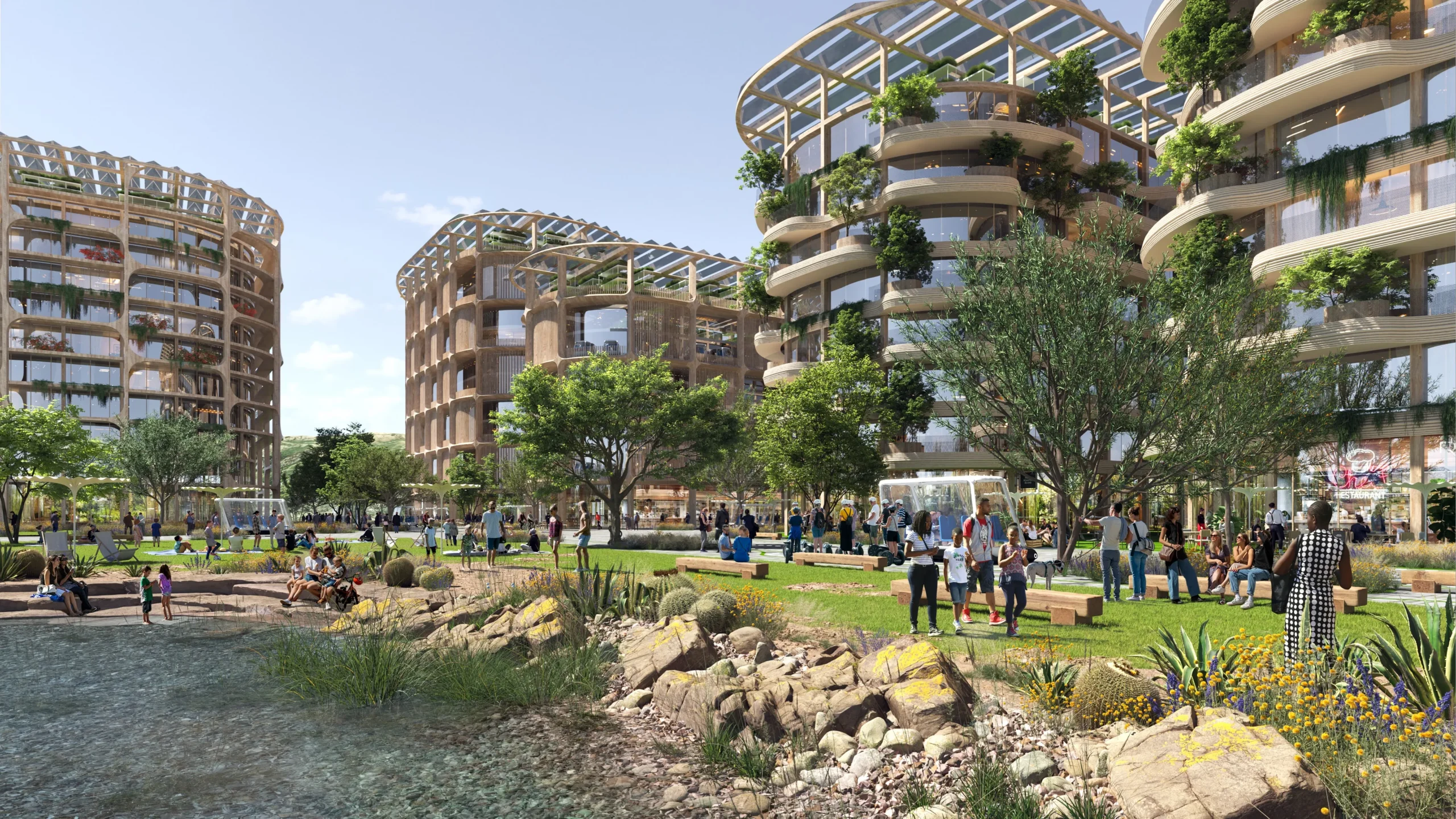
The idea behind equitism is that the city’s land is owned by a community endowment rather than individual landlords, and rising land values are supposed to fund public services and maybe even dividends instead of flowing to the landowner class. Buildings and businesses can still be privately owned, but the ground beneath them is effectively leased from the commons, with the founder’s foundation and charter defining what “commons” means. It’s a clever hack on paper — part Georgist land value capture, part civic venture fund — but it still concentrates the keys in the hands of whoever steers the endowment and writes the rules. From a cyberpunk perspective, Telosa reads like the prestige showroom of the corporate city-state: all glass, trees, and equity talk up front, with the real leverage hiding in the algorithms that ordinary residents will never fully see.
Shared DNA: Patterns Across Praxis, Próspera, Telosa
Look past the branding and art direction and these three experiments share the same skeleton. Each one tries to repackage governance as something closer to a product: it has a founder story, a roadmap, a curated user base, and a promise that life will simply “run better” inside its boundaries. Instead of starting from messy, inherited institutions and trying to reform them, they all hope to reboot the rules without asking everyone’s permission first. Old cities grow; these are shipped.
They also converge on the same quiet swap: you stop being primarily a citizen and start being a user or member. Entry is gated — by application, by capital, by professional profile, by willingness to sign onto a particular ideology of progress. Behavior inside the city is mediated by infrastructure and contracts more than by tradition; the “social contract” becomes literal, something you tick through in an onboarding flow.
Honorable Mention: NEOM
I’ve talked about Saudi Arabia’s NEOM and its flagship project The Line on this blog before, so I won’t get too deep into it here. Suffice it to say that it’s intended to be a fully planned “smart” environment where almost everything — from transport to waste to health — is orchestrated by sensors and AI. This is already raising fears of a luxury surveillance state that mines resident data at massive scale in a country with little meaningful privacy protection. There are also charter-city style projects in Africa (like Itana or Silicon Zanzibar) which add another layer: explicitly framed as development accelerators and talent hubs, but sitting in tension with questions about who actually owns the future urban fabric and whose laws will apply there.
Ah, But Now It’s Real!
I can’t believe we need to remind people of this, but cyberpunk was (and is) meant to be a warning. The megacorps and arcologies were originally exaggerations. Thought experiments about what happens when capital trumps the state.
Now, projects like Praxis, Próspera, and Telosa land much closer to business plans than metaphors: the tropes are the same, but the language has been swapped out for “innovation zones,” “charter cities,” and “community endowments.”
If the future city is something you apply to, that optimizes itself around investors and dashboards, what does that make the people inside it? Are they citizens with rights, customers with refund policies, or just acceptable collateral damage when the experiment goes sideways? All I know is that reality and cyberpunk are merging; the next iconic sci‑fi setting might not be an imagined sprawl at all, but a real patch of desert or coastline with a clean logo, a glossy brand video, and a cap table full of names you already recognize.